Self-paced Ayurveda course
Home Remedies: Health in your Home Farmacy
Unlock the secrets of natural healing with our ayurveda home remedies course. Learn to craft effective remedies with confidence.
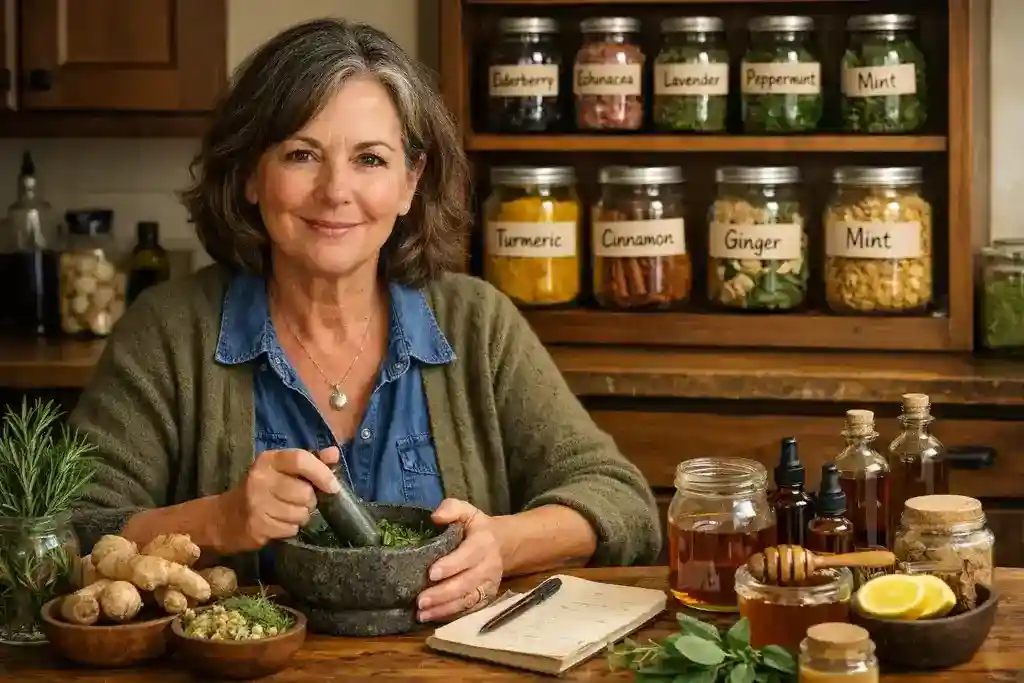
A look inside
Course curriculum
01Approach to Ayurvedic Healing3 lessons
Introduction to the Home Farmacy Course: Ayurvedic Home RemediesVideo lessonRead outline
Introduction to the Home Farmacy Course
This introductory lesson lays the foundation for your Ayurvedic farmacy course, giving you a clear understanding of how home remedies work and why they are so effective. You’ll learn the elemental logic behind remedies, how digestion and taste influence healing, and how symptoms shift based on dosha qualities. Rather than memorizing recipes, this course teaches you the reasoning system that makes Ayurvedic remedies predictable and safe to use.
We’ll explore where home remedies fit within the broader Ayurvedic framework and how they differ from deeper therapeutic processes, and long-term metabolic correction. You’ll also learn how your body constitution shapes remedy outcomes and why the qualities of a symptom, not your dosha (body type) identity, should guide your selection.
This lesson introduces basic remedy classifications, essential kitchen tools, potency adjustments, and proper storage so you can build a functional home pharm. By the end, you’ll have a practical roadmap for choosing remedies based on opposite qualities (warming, cooling, moistening, lightening) and a strong foundation before moving into the specific formulations covered later in the farmacy course.
Ayurvedic Healing Through Your Home FarmacyVideo lessonRead outline
Ayurvedic Healing Through Your Home Farmacy
This lesson introduces the core principles of Ayurvedic healing by showing how your kitchen becomes the most practical entry point into restoring balance. Long before clinical therapies or complex herbal compounds, Ayurveda relied on everyday plants, spices, roots, and foods—ingredients chosen not for tradition, but for their specific qualities and predictable effects on the body.
You’ll learn how these qualities (hot, cold, oily, dry, heavy, light, and more) function as the diagnostic language of Ayurveda. Once you recognize the qualities of a symptom, you can match it with the opposite quality to correct the disturbance. This is the foundation of true Ayurvedic healing: seeing patterns, identifying the root imbalance, and applying precise remedies rather than guessing.
We break down the difference between nutrition, which influences long-term balance, and remedies, which provide fast, targeted relief while deeper rebalancing takes place. You’ll also understand how home remedies fit into Ayurveda’s larger framework of supporting digestion, clearing toxins, stabilizing doshas, and preventing symptoms from progressing. This module prepares you to formulate remedies confidently and intentionally as the course advances.
Understanding Imbalance and the Role of Ayurveda RemediesVideo lessonRead outline
Understanding Imbalance and the Role of Ayurveda Remedies
This lesson explains how digestion, toxins, and tissue metabolism form the backbone of Ayurvedic diagnosis, and why Ayurveda remedies are so effective when used at the right stage of imbalance. Ayurveda teaches that health begins with strong digestion. When digestive fire weakens, the body forms Ama, tissues receive poor nourishment, and localized signs slowly spread into systemic symptoms. Understanding this predictable progression allows you to choose the right intervention, from gentle digestive support to targeted home remedies.
You’ll learn how early signs like tongue coating, subtle digestive irregularity, heaviness, or heat are signals that the system is shifting off balance. Ayurveda remedies step in here: they support digestion, reduce emerging toxins, lighten heaviness, calm irritation, and keep disturbances from deepening. As imbalance becomes more established, deeper core therapies work alongside remedies to restore digestion, detoxify tissues, rebuild vitality, and support Ojas.
This lesson also clarifies how Vata, Pitta, and Kapha respond differently to remedies—and why aligning qualities is essential for effective healing. By the end, you’ll understand how short-term Ayurveda remedies and long-term therapies work together to prevent, correct, and stabilize the body through each stage of imbalance.
02Classification of Home Remedies: Herbs, Spices & Carriers3 lessons
Classifying Home Remedies and Choosing the Right Herbs for HealingVideo lessonRead outline
Classifying Home Remedies and Choosing the Right Herbs for Healing
This lesson introduces a practical Ayurvedic system for selecting herbs for healing based on the stage of imbalance in the body. Instead of guessing which remedy to use, you’ll learn how Ayurveda categorizes home remedies into three clear groups—Digestion Support, Manifestation Support, and Immunity Support—each addressing a different depth of disturbance.
You’ll begin with Digestion Support, the first line of defense when symptoms are mild and limited to the gut. Here, warming spices like ginger, and cumin help kindle digestive fire and prevent toxin formation. When toxins have spread beyond the digestive tract, Manifestation Support becomes necessary. This category uses stronger metabolic herbs such as trikatu, neem, turmeric, and bitter blends to burn or dry circulating toxins and reduce systemic symptoms like fogginess, skin irritation, or heaviness.
Once digestion is stable, the focus shifts to Immunity Support. These rejuvenating foods and herbs—ashwagandha, amla, ghee tonics, stewed fruits—rebuild vitality, nourish tissues, and strengthen long-term resilience.
By understanding these three categories, you gain a precise, stage-based method for choosing the right herbs for healing, exactly when your body needs them.
Building Your Home Farmacy With Spices for HealingVideo lessonRead outline
Building Your Home Farmacy With Spices for Healing
This lesson shows you how to set up an Ayurvedic spice rack and use spices for healing as fast-acting tools for digestion, balance, and early symptom support. In Ayurveda, spices are not just flavor enhancers—they are targeted therapeutic agents that can warm, cool, soothe, or activate the system within minutes. By understanding the difference between heating and cooling spices, you gain the ability to correct imbalances instantly and tailor any remedy to your needs.
You’ll learn how heating spices like ginger, cumin, ajwain, turmeric, and black pepper strengthen digestive fire, clear heaviness, mobilize stagnation, and support circulation—making them essential for sluggish, cold, or irregular digestion. Cooling spices such as fennel, coriander, cardamom, peppermint, and rose help calm excess heat, acidity, irritation, and inflammation while keeping digestion steady.
The lesson also breaks down Eastern Ayurvedic spices, their Western equivalents, universal botanicals, and how each contributes to your Home Farmacy. By the end, you’ll understand which spices are foundational, when to use warming or cooling blends, and how to adapt remedies for season, symptoms, and constitution. This structure makes your spice rack a complete therapeutic toolkit for daily healing.
How Carriers Shape Ayurvedic Herbal PreparationsVideo lessonRead outline
How Carriers Shape Ayurvedic Herbal Preparations
This lesson introduces one of the most overlooked foundations of Ayurvedic practice: using the correct carrier, or Anupana, to transform simple ingredients into effective herbal preparations. In Ayurveda, an herb never works in isolation. The carrier—whether ghee, milk, honey, water, or oil—determines how deeply the herb penetrates, how strongly it acts, and which tissues it reaches. By choosing the right medium, you can customize a single herb to behave differently for Vata, Pitta, or Kapha without changing the formula itself.
You’ll learn how carriers influence absorption, potency, direction of action, and constitution-specific effects. Practical mapping shows how turmeric, ginger, ashwagandha, and other herbs shift their therapeutic profile depending on whether they’re paired with ghee, milk, or honey. The lesson also explains when neutral carriers like water or topical oils are safer choices, especially for sensitive digestion, heat conditions, or external applications.
By the end, you’ll understand how Ayurvedic herbal preparations are engineered: the herb provides the action, but the carrier decides how the body receives it. This is what allows you to adapt remedies for different family members, prevent aggravation, and create precise, personalized Home Farmacy treatments.
03Preparation Methods of Ayurveda Remedies9 lessons
Ayurvedic Preparation Methods for Herbalist ClassesVideo lessonRead outline
Ayurvedic Preparation Methods for Herbalist Classes
This lesson gives you the essential framework taught in high-quality herbalist classes: how different Ayurvedic preparation methods change the strength, depth, and therapeutic action of an herb. In Ayurveda, the form of a remedy is just as important as the ingredient itself. Powders, infusions, decoctions, oils, pastes, and fomentations each extract different qualities and deliver herbs to different layers of the body. Understanding these distinctions allows you to match the method to the problem with precision.
You’ll learn why powders act quickly, why infusions are ideal for sensitive digestion, and why decoctions penetrate deeper tissues. You’ll also see how herbal oils and pastes provide concentrated external support, and how fomentation uses heat to mobilize stagnation and relieve stiffness. The lesson also covers the foundational principles—gentle heating, proper proportions, and constitution-specific carriers—that ensure the remedy behaves safely and effectively.
By the end, you’ll understand not only what to prepare, but how and why each preparation works. This is the practical skillset that elevates simple kitchen herbs into targeted therapeutic tools, and what every serious student expects from professional herbalist classes.
Method 1: Ayurveda Powder Mix (Churna) Preparation PreparationVideo lessonRead outline
Method 1: Ayurveda Churna Preparation
Churna is one of Ayurveda’s most flexible and reliable internal remedy forms, offering gentle, steady support for digestion, metabolism, and early-stage imbalance. Made by grinding herbs or spices into a fine powder, a Churna is easy for the body to process and ideal for long-term use. Its real strength lies in customization: the same powder blend behaves differently depending on the carrier. Ghee grounds Vata, milk cools Pitta, and honey stimulates Kapha—allowing each person to receive a tailored therapeutic effect.
Because Churnas never overwhelm the gut, they are excellent for mild digestive issues, weak metabolism, early ama, or gradual daily regulation. They fit seamlessly into routines, travel easily, and require no boiling or cooking. Churnas shine in situations where the body needs encouragement rather than force: sluggish digestion, mild congestion, early symptoms, or gentle detox support. They can also be blended into food or taken alone for ease and consistency.
Although not suited for severe or deep organ conditions, Churna remains a foundational Ayurvedic tool—safe, adaptable, and highly effective for maintaining internal balance over time.
Method 2: Ayurveda Infusion (Tea or Phanta) PreparationVideo lessonRead outline
Methods 2: Ayurveda Infusion (Tea or Phanta) Preparation
Ayurveda tea made through infusion is one of the gentlest and safest ways to support digestion, calm irritation, and restore balance. Because infusions rely on steeping rather than boiling, they extract the light, delicate, water-soluble qualities of herbs—making them ideal for sensitive digestion, mild heat, dehydration, early symptoms, or emotional agitation. When someone cannot tolerate heavy powders, oils, or strong preparations, an Ayurveda tea offers cooling, hydrating, and soothing support without overwhelming the gut.
This method works especially well for issues like nausea, Pitta irritation, low appetite, early sore throat, mild congestion, or stress-related digestive sensitivity. Herbs such as fennel, coriander, mint, chamomile, tulsi, ginger, and rose can be combined to match the qualities of the imbalance—cooling when heat is present, warming when stagnation appears, or calming when the nervous system is overstimulated.
Because Ayurveda tea can be used daily, even by children, elders, or individuals on medications, it becomes a reliable home remedy for early-stage symptoms, gentle detox, hydration balance, and emotional steadiness. Infusions allow the body to receive therapeutic benefit without heaviness, making them a foundational tool in Ayurvedic home care.
Method 3: Ayurveda Decoction (Kwatha / Herbal remedy) PreparationVideo lessonRead outline
Methods 3: Ayurveda Decoction (Kwatha / Herbal remedy) Preparation
Decoctions, or Kwatha, represent one of the strongest forms of Ayurvedic herbal remedy. Unlike infusions or light teas, decoctions simmer herbs long enough to extract deeper, more potent compounds—making them ideal when the body needs strong penetration, deeper detoxification, or relief from chronic stagnation. This form of preparation is reserved for situations where mild methods are not enough, such as organ-level imbalances, moderate to severe Ama buildup, chronic respiratory or digestive congestion, joint stiffness, metabolic disorders, or long-standing inflammatory patterns.
A decoction is the preferred herbal remedy when tough plant materials like roots, barks, seeds, or resins must be broken down to release their therapeutic qualities. These extracts reach deeper tissues, help dissolve blockage, and deliver stronger action than powders or infusions. Classical herbs such as Dashamoola, Punarnava, Arjuna, Triphala, and Manjistha are commonly used in this form because they require heat and reduction for full potency.
Because decoctions are powerful, they are not meant for sensitive digestion, depleted individuals, or mild symptoms. They work best when a stronger therapeutic push is needed and when deeper layers of the body must be reached for meaningful correction.
Method 4: Ayurveda Oils (Taila) PreparationVideo lessonRead outline
Method 4: Ayurveda Oils (Taila) Preparation
Ayurveda oils play a foundational role in traditional healing because they nourish, lubricate, and stabilize tissues in a way that water-based remedies simply cannot. These herbal oils deliver both fat-soluble and water-soluble plant compounds deep into the body, making them essential for managing dryness, stiffness, nervous depletion, chronic pain, and long-standing Vata imbalance. When warmed and applied to the skin, Ayurveda oils improve circulation, calm inflammation, support lymphatic movement, and ground an overactive mind.
They are especially useful for issues involving joint discomfort, muscle tightness, dry or irritated skin, anxiety, sleep disturbances, and chronic conditions that respond poorly to lighter remedies. Oils such as Ashwagandha, Sesame, Mahanarayan, Brahmi, and Neem each play targeted therapeutic roles—from rebuilding strength to soothing nerves or cooling inflammation.
Ayurveda oils also form the backbone of classic therapies like abhyanga and warm compress treatments, where heat amplifies absorption and deepens the effect. While powerful, they must be chosen and applied thoughtfully, especially for high-Pitta or Kapha-dominant individuals.
This lesson shows you exactly when, why, and how to use Ayurveda oils safely and effectively for long-term healing.
Method 5: Ayurveda Pastes (Lepas) PreparationVideo lessonRead outline
Method 5: Ayurveda Pastes (Lepas) Preparation
Lepas, the Ayurvedic practice of applying herbal pastes directly to the skin, offer fast, localized relief by keeping herbs in steady contact with affected tissues. Unlike internal remedies, lepas bypass digestion entirely, making them ideal when the issue is superficial, inflamed, or needs targeted action. They excel at cooling heat, reducing swelling, drawing out surface-level ama, easing acute muscle or joint pain, and soothing irritated or overheated skin.
Because lepas act quickly and stay in place for extended periods, they are especially effective for Pitta-based symptoms, acute injuries, and conditions where oils may feel too heavy or decoctions too deep-acting. Their versatility comes from simple ingredients—herbal powders, fresh leaves, clays, spices, and liquids like water, rose water, or aloe—allowing the practitioner to tailor each paste to the qualities of the imbalance.
Lepas work best when thick, moist, and evenly applied, creating a therapeutic barrier that cools, calms, and detoxifies. They shine in situations requiring rapid relief, overnight treatment, or direct toxin extraction. For anyone building a home remedy toolkit, lepas provide one of the most accessible and powerful external therapies in Ayurvedic care.
Method 6: Ayurveda Hot Compress Therapy (Swedana) PreparationVideo lessonRead outline
Method 6: Ayurveda Hot Compress Therapy (Swedana) Preparation
Swedana, or Ayurvedic heat therapy, is a foundational method for loosening tension, increasing circulation, and clearing stagnation from the body. This practice uses warm compresses, steam, or heated herbal boluses to soften rigid tissues, mobilize ama, and bring fluid movement back into areas that feel tight, cold, or heavy. Swedana is especially valuable for Vata and Kapha conditions, where coldness, stiffness, or congestion prevent proper flow.
The treatment is ideal for situations such as restricted movement, muscle tightness, joint stiffness, lymphatic stagnation, sinus or chest congestion, and Kapha-type heaviness. When paired with herbal oils, Swedana enhances absorption and drives medicinal compounds deeper into tissues. It also supports detoxification by opening the channels, stimulating mild sweating, and improving microcirculation.
Because heat calms Vata, Swedana plays a powerful role in nervous-system relaxation, reducing mental tension and creating a sense of ease. However, it must be avoided in high-Pitta states, fever, acute infections, open wounds, dehydration, or extremely inflamed joints.
Overall, Swedana is a versatile herbal-heat therapy that restores mobility, melts stagnation, and enhances the effectiveness of other Ayurvedic remedies.
Summary of Remedies and Preparation Methods, and Review of Remedy PotenciesVideo lessonRead outline
Summary of Remedies and Preparation Methods, and Review of Remedy Potencies
Learning how to make home remedies begins with understanding that every preparation method has its own potency, depth of action, and ideal use. On the gentlest end of the scale are infusions—light, cooling, and perfect for sensitive digestion or early symptoms. Slightly stronger are churnas (powder mixes), which support metabolism and daily balance without overwhelming the gut.
Stepping into higher potency, pastes (lepas) work quickly on the skin to calm swelling, heat, or surface-level pain through direct herbal contact. Deeper still are herbal oils, which nourish tissues, reduce stiffness, and support chronic Vata conditions, especially when paired with heat for enhanced penetration.
At the strongest end sits the decoction (kwatha)—the most powerful water extraction for deeper organ-level needs and chronic internal imbalance.
Understanding this potency scale helps you choose the right method for the right situation. Infusions cool. Powders regulate. Pastes act fast. Oils go deep. Decoctions transform. When you know how to make home remedies with the correct preparation method, your results become more precise, effective, and aligned with the body’s needs.
Remedy Labeling, Shelf-Life, Storage, and Course SummaryVideo lessonRead outline
Remedy Labeling, Shelf-Life, Storage and Course Summary
Understanding proper remedy storage is essential for keeping Ayurveda home preparations safe, potent, and effective. Each preparation—whether an infusion, paste, oil, powder, or decoction—has its own stability window, and the way you store it directly affects how well it works. Dry powders last the longest, while pastes and water-based preparations lose potency quickly and must be refrigerated. Oils have moderate shelf life but are sensitive to heat and moisture, making clean handling and proper containers especially important.
Correct labeling is a core part of remedy storage. Every jar should include the preparation date, the carrier used, and the intended dosha purpose so the user always knows what the remedy is designed for. Glass jars or tins are preferred because they preserve quality and prevent chemical leaching. Good storage habits—keeping remedies out of sunlight, avoiding contamination, and using a clean spoon each time—ensure that each formula retains its intended action until the end of its lifespan.
Effective remedy storage helps students build confidence at home, reduces waste, and preserves the therapeutic integrity of every preparation.
Ayurveda Home Remedies
Build Confidence, Clarity, and Skill in Making Your Own Ayurvedic Remedies
Do you ever wish you understood why certain home remedies work and others don’t? Have you tried teas, herbs, or pantry cures only to get mixed results—and wondered what you were missing? The Ayurveda home remedies course teaches you the deeper Ayurvedic logic behind effective home care: how remedies work, when to use them, and how to craft them with precision rather than guesswork.
Ayurveda has always been a household science—meant for real people, real kitchens, and real needs. This Ayurveda home remedies course brings that wisdom into modern life by giving you a complete system for understanding remedies, not just copying recipes.
What You’ll Explore
Instead of overwhelming you with lists or rigid rules, the Ayurveda home remedies course helps you think like an Ayurvedic practitioner and ask the right questions:
What qualities in an herb or spice actually create therapeutic change?
Why do two people respond differently to the same remedy?
How can simple kitchen ingredients become powerful tools when used the right way?
And most importantly: how do you choose a remedy before a symptom grows into something bigger?
This course helps you see remedies as part of a bigger Ayurvedic framework—not random hacks or trends.
The Three Pillars of Ayurvedic Home Remedies
Every remedy you’ll learn connects back to one of Ayurveda’s core healing principles:
1. Digestion (Agni)
Why do some bodies respond immediately to herbs while others feel nothing?
This course shows you how the strength of your digestive fire determines whether a remedy becomes medicine—or simply passes through unused.
2. Toxin Formation & Spread (Ama)
Many everyday symptoms trace back to metabolic residue that clogs channels and begins to manifest as discomfort.
You’ll learn to recognize early patterns and choose remedy methods that reverse this process before symptoms deepen.
3. Immunity & Ojas Building
Ayurveda sees immunity not as a “boost,” but as a slow and steady strengthening of the body’s vitality.
Certain remedies nourish deeper tissues while others help the body clean itself so immunity can rise naturally.
The Ayurveda home remedies course subtly reveals how to support both processes without overtaxing the system.
These pillars guide every choice you make—method, herb, carrier, and timing.
Understanding Remedy Methods Without Giving Everything Away
You’ll explore the entire spectrum of Ayurvedic preparation types—from the gentlest infusions to the most potent decoctions and oils.
But instead of memorizing when to use each one, you’ll learn how to think about potency:
When does the body need a light, cooling approach?
When should you choose something stronger that reaches deeper tissues?
How do you know which method is appropriate for your constitution or symptom type?
The course doesn’t reveal the formulas upfront—but it gives you enough insight that you’ll feel confident long before you touch a recipe.
Carriers & Mediums: The Hidden Intelligence Behind Remedies
Most people focus on the herb. Ayurveda focuses on the vehicle that delivers it.
In this Ayurveda home remedies course, you’ll uncover a new perspective:
Ghee can guide herbs deeper into tissues—but when is that desirable?
Milk can soothe and strengthen—but who should avoid it and when?
Honey scrapes and detoxifies—but why does timing matter?
Water carries herbs lightly—but what does “light” really mean?
Oil anchors, nourishes, and grounds—but what happens if you use it at the wrong time?
You’ll learn just enough to become fascinated—but the full mastery unfolds inside the lessons.
Who Is This Farmacy Course For?
This Ayurveda home remedies course is perfect for anyone who:
Wants to confidently make remedies without risking misuse or confusion
Feels overwhelmed by conflicting online information
Wants a truly Ayurvedic system for digestion, immunity, and daily wellness
Loves learning how things work rather than following rote instructions
Wants a practical skill they can use for themselves and their family for life
You do not need prior Ayurvedic knowledge—just curiosity and willingness to learn.
What You’ll Gain
By the end of this journey, you will be able to:
Understand how digestion, toxins, and immunity shape all remedy decisions
Choose the right preparation method for the right symptom
Know when to use powders, when to use infusions, when to choose oils, and when to avoid decoctions
Build your own home apothecary with correct labeling, storage, and safety
Feel confident treating early symptoms before they escalate
Make remedies that actually work because you understand the logic behind them
Why Take This Course?
Because knowing how to choose and craft a remedy is far more powerful than memorizing recipes.
If you want to understand the art and science behind effective Ayurvedic home care—and finally feel competent, empowered, and grounded in your approach—the Ayurveda Home Remedies Course will show you exactly how.
Before you begin
Notice
Home Farmacy: Mastering Ayurvedic Remedies for Daily Healing
Course Overview
Ayurvedic home remedies are built on a simple truth — healing begins with understanding qualities. Every herb, spice, and preparation method carries a specific action, and when used correctly, they can restore balance long before symptoms become chronic.
When used with precision, home remedies strengthen digestion, prevent toxin spread, and support immunity through gentle, natural methods.
When misunderstood, remedies can aggravate heat, weaken digestion, or drive toxins deeper.
This course teaches you how to work with remedies wisely — by learning the logic behind preparation methods, the potency scale, and the correct use of carriers such as ghee, honey, milk, oil, and water. You’ll gain a clear framework for choosing the right remedy at the right time, for the right person, with confidence and safety.
You’ll Learn About
Understanding the five major remedy methods — infusion, decoction, powder mix, paste, oil, and fomentation — and the situations each one is designed for
How remedy potency works — from gentle surface-level support to deep organ-level extraction, and how to match intensity to the symptom
The three healing priorities of Ayurveda:
• strengthening digestion (Agni)
• preventing toxin accumulation and spread (Ama)
• supporting immunity and resilience (Ojas)
How qualities guide every decision — heating vs cooling, drying vs moistening, light vs heavy, penetrating vs soothing, and how these shift a remedy’s action
How to choose the right carrier — ghee for nourishment, honey for scraping, milk for cooling, water for cleansing, and oil for grounding and lubrication
How to identify symptom qualities and select the matching opposite — without guessing, memorizing long lists, or relying on generic “one-size-fits-all” remedies
How to build a functional Ayurvedic home pharm using spices, herbs, and simple kitchen tools
How to avoid common mistakes that can aggravate symptoms or weaken digestion
Who This Course Is For
Anyone who wants to confidently use Ayurvedic home remedies without confusion or overwhelm
Beginners seeking a structured, practical way to understand herbal preparations and their effects
Individuals who experience repeating digestive discomfort, toxin-related symptoms, skin issues, or mild congestion and want natural tools for support
Parents, caregivers, and wellness-minded households looking to build a safe, reliable home remedy toolkit
Yoga students, coaches, and holistic practitioners who want deeper knowledge of preparation methods and carrier logic
Anyone who has tried herbs before but wasn’t sure why a remedy worked — or didn’t
Why Enroll
By the end of this course, you’ll:
Understand the Ayurvedic logic behind home remedies — qualities, carriers, potency, and symptom-matching
Recognize the difference between digestion-boosting, toxin-clearing, and immunity-building remedies
Know when to use infusion vs decoction vs paste vs oil vs fomentation — and when not to
Be able to choose the correct carriers and adjust remedial strength for children, elders, or sensitive bodies
Feel confident building and using your own Ayurvedic home pharm with methods that are safe, practical, and rooted in classical principles
Your Takeaway
This course gives you the ability to turn your kitchen into a true Ayurvedic healing space — where spices, herbs, oils, and simple preparations become tools for restoring balance, strengthening digestion, and preventing toxin buildup.
You’ll leave with a complete, intuitive framework for crafting remedies that act with precision, safety, and depth — empowering your home to be a place of clarity, capability, and natural healing all year long.
Who this is for
Intended audience
This course is designed for anyone who wants to understand how Ayurvedic home remedies truly work—and how to use them safely, effectively, and confidently in everyday life. Whether you’re brand new to Ayurveda or have prior experience, the course meets you where you are and shows you how to turn your kitchen into a practical, intelligent healing space.
Individuals who want to use natural remedies at home
Perfect for anyone who wants to learn how to select the right remedy, match it to symptoms correctly, and avoid common mistakes that weaken results.
Those who experience recurring digestive issues or toxin-related symptoms
If you struggle with bloating, sluggish digestion, mild inflammation, congestion, or symptoms that “move around” the body, this course helps you understand why, and teaches you how to choose the proper remedy method and carrier to support healing.
Parents, caregivers, and household wellness managers
Ideal for people who want a safe, structured system to support family health with simple tools—infusions, pastes, oils, decoctions, and hot compresses—without confusion or guesswork.
Yoga practitioners, coaches, bodyworkers, and holistic health professionals
If you already know Ayurveda at the level of doshas and diet, this course gives you the deeper layer: how remedies work, how to adjust potency, and how to use carriers (ghee, milk, honey, water, oil) to shape a remedy’s action.
Anyone who wants to understand the principles behind natural healing
This course shines for learners who appreciate “why” behind the method—why herbs need different preparations, why potency matters, how toxins spread, and how digestion determines whether a remedy works or backfires.
By the end of the Home Farmacy Course, participants will not only understand the six major Ayurvedic remedy methods—they’ll know how to choose the right preparation, carrier, and potency for the right symptom. You’ll gain a clear, structured framework to create safe, effective, personalized remedies at home using the timeless principles of Ayurvedic pharmacology.
Course Features Summary
If you’re ready to stop guessing and finally understand how Ayurvedic home remedies are created, chosen, and used safely, this farmacy course will show you how. Each CureNatural program is built to deliver an immersive learning experience that blends visual teaching, written guidance, and practical application—so you gain real confidence in preparing remedies at home.
Course includes:
- High-quality video lessons- Step-by-step teaching that breaks down remedy methods such as infusions, decoctions, pastes, oils, carriers, and compresses. Complex concepts—potency, symptom mapping, digestion strength, ama stages—are taught in a clear, practical way so you can apply them instantly.
- Accompanying course text- Every video is paired with complete written lessons below it, allowing you to review instructions for preparing infusions, oils, churna mixes, lepas, and other remedies. Ideal for note-taking, reinforcing technique, and understanding nuances.
- Interactive quizzes- After each module, short quizzes help you test your understanding of Ayurvedic principles like how to match a remedy to digestion, how to choose the correct carrier (ghee, honey, milk, oil, or water), and how to read early symptoms of imbalance.
- Engage actively- Pause the videos, take notes, and reference the written text below each lesson. This farmacy course encourages hands-on thinking—so you don’t just watch remedies being explained… you learn how to create and adjust them based on real scenarios.
- Comprehensive course materials guide- All lesson summaries, preparation charts, potency scales, and reference tables are professionally organized and downloadable as a PDF, giving you a complete Home Farmacy manual for lifelong use.
- Best browser compatibility- Our platform uses DRM technology to protect teaching content. For the best viewing experience, use Safari on Apple devices or Chrome on any computer. If videos do not play, try disabling browser extensions or using Incognito Mode to confirm extension conflicts.
- Content protection- To maintain course integrity and safeguard CureNatural’s intellectual property, screen captures and downloads of video lessons are not permitted.
CureNatural courses are designed for learners who want clarity, structure, and confidence. This farmacy course combines traditional Ayurvedic remedy science with modern learning technology—offering a clean, organized, and highly practical path to mastering home remedies with precision and safety.
Getting started
Course requirements
To get the most out of the Home Farmacy Course, it is strongly recommended that you first complete:
- Elemental Ayurveda- This foundational course helps you understand the building blocks of Ayurvedic thinking—the five elements, the three doshas, and how their qualities shape symptoms. Since every remedy in the farmacy course is chosen based on qualities (heating, cooling, drying, moistening, heavy, light), this background makes it far easier to understand why certain remedies work and when to use them.
- Mastering Digestion- All Ayurvedic home remedies depend on one central principle: digestive strength (agni). Weak digestion leads to toxin formation (ama), and ama determines how symptoms spread and manifest. Because the Home Farmacy Course teaches you how to match remedies to stages of digestion, toxin buildup, and symptom qualities, having this digestion framework is extremely valuable before learning remedy selection and potency.
No prior professional training in Ayurveda is required, but an openness to learning and applying Ayurvedic principles in everyday life is essential. By building on these two core courses, you will have the clarity and confidence to fully engage with the Home Farmacy lessons—covering remedy methods, carriers, potency levels, and safe, effective preparation at home.
From learners
Student reviews
Rami C.
I came to this course looking for ways to create my own home remedies using herbs and I wanted to create my own oils. This course didn't disappoint. It is packed with information. It talks about the right mediums to use for your remedies based on body types, and how to actually create everything. Whether you want a decoction, paste, oil or you want to know how to prepare a proper herbal tea daily, this course tells you the amounts and proportions you need. This is what I was looking for. I plan to buy bulk herbs and just make things at home, easier, and cheaper. I didn't even know about Ayurveda, but I'm definitely interested in learning more about it. But using Ayurveda techniques for remedies, works for anyone whether you practice Ayurveda or not. Great job with explanations and visual. Your content is superb.
Helpful context
Frequently asked questions
1. What is the Home Farmacy Course?
2. Who should take the Home Farmacy Course?
3. What makes this course an Ayurvedic “farmacy” and not just a herbal class?
4. How will this course help me choose the right remedy safely?
5. What is meant by Ayurvedic Body Constitution in the context of remedies?
6. Do I need prior Ayurvedic knowledge before taking this course?
7. Will I learn how to make remedies for specific symptoms?
8. Does this course cover how to use carriers like ghee, honey, and milk?
9. Will this course help me avoid common mistakes with home remedies?
10. What practical skills will I gain by the end of the Home Farmacy Course?
• Recognize the qualities behind symptoms
• Choose the correct remedy method and potency
• Use household spices and herbs with confidence
• Select the right carrier for the right condition
• Build a safe, functional remedy shelf at home
• Support digestion, prevent toxin formation, and strengthen immunity
This course gives you the tools to create a calm, capable, Ayurvedic home-healing practice for life.