Kapha Foods: The Best Foods for Kapha Dosha by Category (Plus Tastes to Favor)

Feeling sluggish, heavy, foggy, or like your body is stuck in “low gear”? If so, choosing the right foods for Kapha dosha or Kapha foods can make meals feel lighter and more energizing. Kapha balancing foods help to reduce the “slow & stuck” feelings that Kapha imbalanced people have, while improving clarity and motivation.
Kapha is the dosha of structure and stability. When it’s high, your body often responds best to foods that are warm, light, dry(er), and well-spiced—the opposite of “cold, creamy, heavy, and too sweet.” This guide gives you a practical Kapha foods list by category (vegetables, fruits, proteins, dairy, grains & legumes, nuts & seeds, oils, spices)—with “best choices,” “okay sometimes,” and “limit,” plus how much to aim for.
How to use this foods for Kapha Dosha list
Keep it simple:
Best (most days): your go-to Kapha-balancing foods
Okay sometimes: rotate in a few times per week
Limit (occasionally): not “bad,” just more likely to increase heaviness, mucus, sluggish digestion, or cravings
One more rule that changes everything for Kapha:
Warm and light beats cold and heavy most of the time—especially in damp/cold seasons or when you already feel “stuck.”
Before you copy this foods for Kapha Dosha list… read this
This article is written for people searching “Kapha foods” or “foods for Kapha dosha,”
but here’s the nuance that changes everything: most people are not purely Kapha. You’re typically a combination
(Kapha-Vata or Kapha-Pitta), and your current state can be very different from your birth constitution.
Example: you might be born Kapha-Pitta, but right now be running a strong Kapha imbalance from heavy foods,
low activity, stress-eating, poor sleep, or winter habits. In that case, even “healthy” foods can land differently.
So treat these recommendations as a Kapha balancing foods list—but not your personal list or plan.
To check your own:
birth and current body type (or dosha), take the Ayurveda dosha test.
Foods for Kapha Dosha require specific tastes (Ayurvedic rasa)
In Ayurveda, tastes have effects. For Kapha, think: lightening, drying excess heaviness, and stimulating digestion.
Favor (most often):
Pungent (warming spices, aromatics)
Bitter (greens, many vegetables)
Astringent (legumes, many veggies, some fruits)
Go easy on (especially when Kapha is high):
Sweet (sweets, heavy carbs, too much comfort food)
Sour (too much can increase heaviness in some)
Salty (can increase water retention/heaviness)
If this feels abstract, here’s the shortcut:
Kapha usually does best with food that feels like warm + light + spiced + veggie-forward.
Kapha foods
Kapha balancing foods: Vegetables
Foods for Kapha dosha always start with vegetables. They bring volume without heaviness, and they’re the easiest place to build “light and energizing.” Kapha does especially well with bitter, astringent, and lightly cooked vegetables—plus spices to stimulate digestion.
Best (most days):
Leafy greens (kale, arugula, spinach, chard)
Crucifers: broccoli, cauliflower, cabbage, Brussels sprouts
Asparagus, green beans, zucchini
Onions, garlic, ginger (great Kapha activators)
Okay sometimes:
Carrots, beets, sweet potato (watch portions if you feel heavy)
Mushrooms (if they digest well)
Bell peppers
Limit (especially when Kapha is high):
Very starchy, heavy veggie plates as the main event
Creamy veggie dishes (cheese sauces, heavy casseroles)
How much:
Aim for 2 cups vegetables per meal (yes, more than you think). Kapha usually thrives when vegetables are the base of the plate.
Kapha balancing foods: Fruits
Foods for Kapha dosha list must include fruits, but Kapha tends to do best with fruits that feel lighter, less heavy, less overly sweet, and ideally not eaten late at night. Room temperature is usually better than cold.
Best (most days):
Apples, pears
Berries
Pomegranate
Grapefruit (if it suits you)
Okay sometimes:
Peaches, plums
Melon (not ice-cold)
Limit:
Very sweet fruits in large amounts (especially late)
Dried fruit as a frequent snack (often concentrated sweet/heavy)
How much:
1 serving/day is enough for many Kapha types. If you crave sweets, fruit earlier in the day is a smarter choice than desserts.
Kapha balancing foods: Proteins (plant + animal)
Kapha does best with protein that’s light and not greasy. Legumes are often a great Kapha staple. If you eat animal foods, the goal is “best choice + lighter preparation + more vegetables.”
Best (most days):
Lentils, mung beans, chickpeas
Tofu/tempeh
Beans in soups/stews with spices
Okay sometimes (if you eat animal foods):
White fish (light, not fried)
Lean poultry (moderate portion)
Eggs (some do fine; watch heaviness)
Limit:
Red meat (often heavy for Kapha)
Fried proteins
Heavy creamy sauces with protein
How much:
Aim for a palm-sized portion per meal (or ¾–1 cup legumes). If weight/heaviness is the main concern, keep animal protein moderate and add more vegetables.
Kapha balancing foods: Dairy
Dairy is one of the most common Kapha “heaviness builders,” but you don’t have to be rigid. Think: “best choice + how often.”
Best (most days, if tolerated):
Small amounts of ghee (often better than heavy cheese)
Warm, spiced milk in small amounts (some tolerate; many do better with less)
Okay sometimes:
Yogurt in small amounts, earlier in the day (not late at night)
Limit (especially when Kapha is high):
Cheese-heavy meals
Ice cream
Cold dairy late at night
How much:
If Kapha symptoms are strong (mucus, heaviness, sluggishness), try dairy a few times per week instead of daily and notice the shift.
Kapha balancing foods: Grains & legumes
Grains can work for Kapha—but portion and choice matter. Legumes usually win more often than grains for Kapha.
Best (most days):
Barley (classic Kapha grain if digestion handles it)
Buckwheat
Quinoa (moderate portion)
Legumes (lentils, chickpeas, mung)
Okay sometimes:
Brown rice
Oats (watch heaviness; keep portions modest)
Limit:
Large bowls of pasta/bread-heavy meals
Sugary baked goods (grain + sugar stack)
How much:
Most Kapha types do well with ½ cup cooked grain per meal (or skip grains at dinner and emphasize vegetables + legumes).
Kapha balancing foods: Nuts & seeds
Nuts and seeds can be healthy, but they’re dense and easy to overdo. For Kapha: small portions, not daily handfuls.
Best (most days):
Pumpkin seeds
Sunflower seeds
Flax/chia (soaked)
Okay sometimes:
Almonds (smaller portion)
Walnuts (small portion)
Limit:
Large handfuls of nuts as snacks
Very roasted/salted nuts in excess
Nut butters by the spoonful as a frequent habit
How much:
1–2 tablespoons seeds or a small handful of nuts is plenty.
Kapha balancing foods: Oils & fats
Kapha usually does best with lighter cooking methods and less oil than Vata. Oils aren’t “bad”—but excess oil adds heaviness fast.
Best (most days):
Olive oil (light use)
Ghee (small amounts)
Avocado (moderate)
Okay sometimes:
Coconut oil (watch heaviness; some feel fine)
Limit:
Deep-fried foods
Heavy oily sauces
Very high-fat eating as a daily default
How much:
Keep oils to 1 tablespoon per meal (often enough). If meals feel heavy, reduce oil before cutting vegetables/protein.
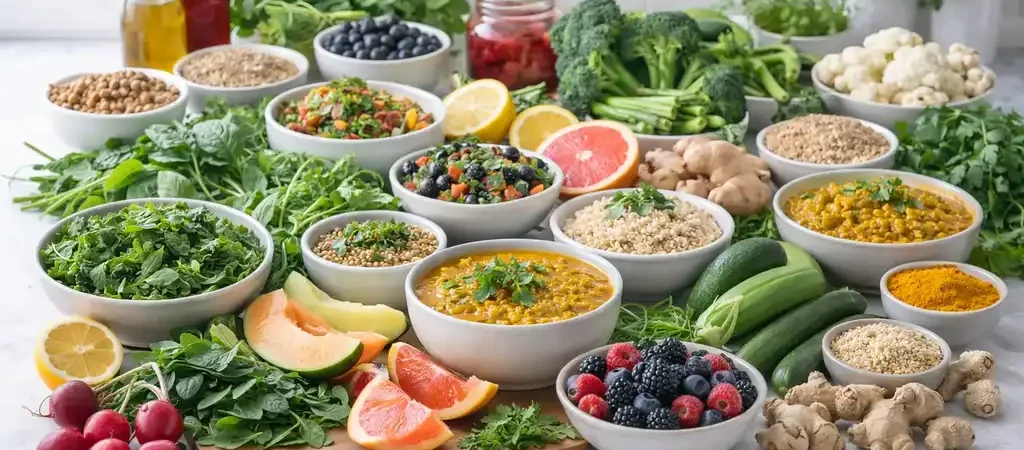
Kapha balancing foods: Spices & herbs
Spices are one of Kapha’s best tools. The goal is warmth, stimulation, and better digestion—without making every meal painfully spicy.
Best (most days):
Ginger
Black pepper
Cumin
Coriander
Turmeric
Cinnamon
Mustard seed (if you use it)
Okay sometimes:
Chili flakes/cayenne (small amounts, if tolerated)
Limit:
Very sweet spice drinks (sugar + spice still stacks Kapha)
Heavy creamy curries as the default
How much:
Use spices daily—especially in soups, legumes, and cooked vegetables. For Kapha, spices often do what “snacks” try to do: create energy.
Kapha portion & frequency guide (not restrictive)
Instead of strict rules, use this rhythm:
3 meals/day at consistent times
Light breakfast (or optional if you’re truly not hungry)
Lunch as the main meal when possible
Early, simple dinner if you feel heavy at night
If you only do one thing:
Build meals around vegetables and keep dinner light.
You might consider the Kapha diet article for a more controlled Kapha meal plan.
Build a Kapha-friendly plate (quick formula)
When you don’t know what to eat, use this:
Vegetables (2 cups)
Protein (¾–1 cup legumes or palm-sized protein)
Healthy fat (1 tablespoon)
Spices + herbs (daily)
Optional grain (½ cup cooked, if desired)
If it looks like a warm, spiced veggie-forward bowl, you’re usually on the right track.
If you’re searching for Kapha foods, chances are you want clarity fast. But here’s the truth: most people aren’t just Kapha.
Not sure if you’re “really” Kapha?
You’re usually a blend (Kapha-Vata or Kapha-Pitta), and a proper plan needs to account for both:
your birth constitution (prakriti) — your baseline blueprint
your current imbalance (vikriti) — what’s happening right now based on stress, sleep, digestion, season, routine, and lifestyle
That’s why two people can both identify as “Kapha” and still need very different foods, portions, and meal timing.
If you want a plan that actually fits your body (not just the generic list):
👉 Start the Kapha Dosha Management Course (for the full Pitta-specific system)
or
👉 Download the Ayurveda App to get the diet built in and use AI Chef to generate recipes tailored to your constitution + current imbalance.
Conclusion: Creating Lightness Through Kapha-Friendly Eating
A Kapha-friendly approach to food restores lightness, clarity, and steady energy. Through intentional Kapha foods and thoughtful kapha cooking, digestion strengthens, cravings soften, and motivation becomes easier to access.
Ayurveda does not aim to control the body. It teaches how to listen, respond, and support it intelligently. When food aligns with Kapha’s needs, balance becomes a daily experience rather than a constant pursuit.
References
Govindaraj, P., Nizamuddin, S., Sharath, A., et al. (2015).
Genome-wide analysis correlates Ayurvedic Prakriti types with genetic variations.
Scientific Reports, 5, 15786.Peterson, C. T., Lucas, J., John-Williams, L. S., et al. (2017).
Identification of altered metabolomic profiles associated with Ayurvedic constitutional types.
Journal of Ayurveda and Integrative Medicine, 8(3), 159–165.Mills, P. J., Peterson, C. T., Wilson, K. L., et al. (2018).
Relationships among classifications of Ayurvedic medicine and modern psychological measures.
Journal of Ayurveda and Integrative Medicine, 9(4), 245–251.Rotti, H., Mallya, S., Kabekkodu, S. P., et al. (2014).
DNA methylation analysis of phenotype-specific Prakriti types.
Journal of Translational Medicine, 12, 147.Sharma, R. K., & Dash, B. (2014).
Charaka Samhita: Text with English Translation and Critical Exposition. Chowkhamba Sanskrit Series, Varanasi, India.