Tongue Coating: What It Can Reveal About Digestion, Stress, and Oral Health
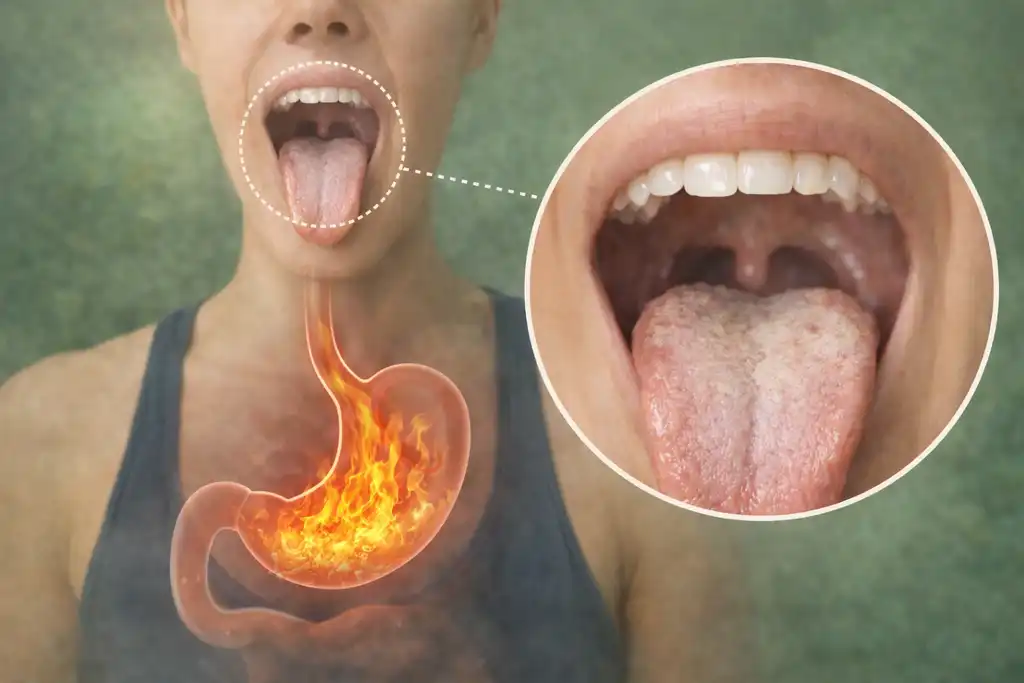
You may already be tracking indicators for your wellness, including gut health, sleep quality, inflammation, and hormones. However, there is one diagnostic indicator of digestive health that is often overlooked and deserves a place on your daily health “dashboard.” That indicator is the mouth. More specifically, Ayurveda looks closely at tongue coating, its direct connection to digestion, and how saliva and stress influence both. This is why Ayurveda tongue diagnosis is a core part of Ayurvedic clinical assessment. In traditional practice, the tongue is examined before any dietary, lifestyle, or therapeutic recommendations are made.
In Ayurvedic medicine, the mouth is not separate from the rest of the body. It is where digestion begins, where immunity expresses itself, and where hydration and the nervous system intersect. Because of this overlap, tongue coating has long been used as an early diagnostic sign of digestive and metabolic imbalance.
In this article, you’ll learn how Ayurveda tongue diagnosis evaluates tongue coating, how mouth and digestion are connected, and why the relationship between saliva and stress plays a much larger role in health than most people realize.
Why an Ayurveda Consult Starts with an Ayurveda Tongue Diagnosis
In Ayurveda, diagnosis begins with direct observation. Before pulse, before questioning, before recommendations, the practitioner looks at the mouth.
This is because the mouth is where digestion starts and where digestive imbalance often shows itself first.
Food enters the body here. Saliva begins the digestive process here. The nervous system influences chewing, swallowing, and secretion here. Because of this, the mouth reflects how well digestion and metabolism are functioning long before deeper symptoms appear.
Ayurveda does not treat the mouth as a separate system. It treats it as an extension of the digestive tract.
That is why the tongue, saliva, lips, and oral tissues are all examined together during an Ayurvedic assessment.
Tongue Coating as a Diagnostic Sign of Digestion
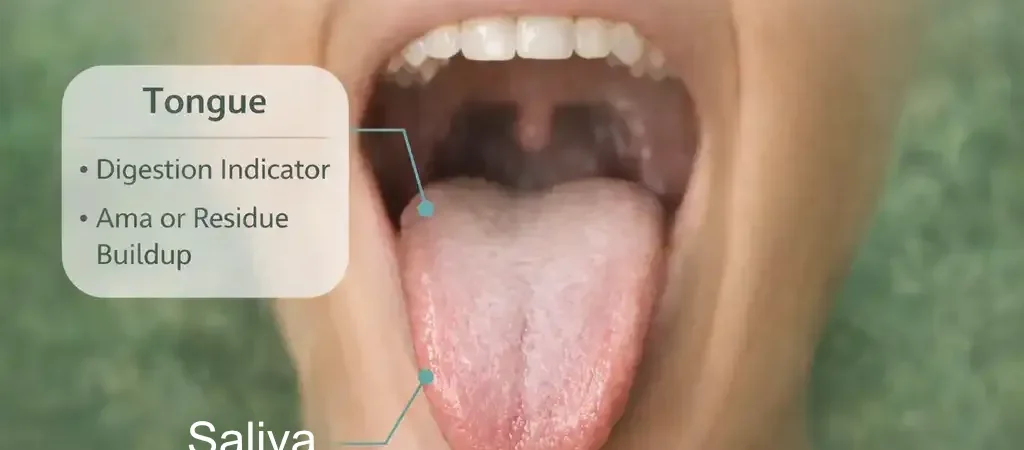
In Ayurveda tongue diagnosis, tongue coating is not cosmetic and not incidental. It is a diagnostic sign.
A clean tongue generally reflects efficient digestion and metabolic clarity. A coated tongue reflects incomplete digestion and the accumulation of metabolic residue, known in Ayurveda as āma.
This residue forms when digestive fire (agni) is not strong enough to fully process food, liquids, or even daily stress. When digestion weakens, the body looks for routes to express that burden. The tongue is one of the earliest and most visible places this happens.
Here are some ways to assess the tongue coasting:
1) Thin, light coating
Often considered closer to baseline for many people. If you feel good, digestion feels steady, and energy is consistent, it may simply be your normal.
2) Thicker coating that lingers
If tongue coating is noticeably thicker for several days, it may coincide with heavier meals, late-night eating, low appetite, sluggish digestion, poor sleep, or travel/routine disruption.
3) Yellowish coating
Some people see more yellow tone when they’re feeling “hot,” inflamed, run down, or when reflux/acid feels more active. It can also relate to oral bacteria changes or dehydration.
4) Dry tongue + coating
Dryness is a big clue because it points toward saliva and stress patterns, hydration, mouth breathing, stimulants, and nervous system load.
This is why tongue coating reflects digestive health, not oral hygiene alone.
Brushing or scraping may remove surface coating temporarily, but Ayurveda pays attention to how quickly the coating returns and what it looks like over time. That persistence matters more than appearance on a single day.
How Mouth and Digestion Are Directly Connected
Modern health discussions often separate oral health from digestion. Ayurveda never made that split.
From an Ayurvedic view, digestion does not begin in the stomach. It begins in the mouth.
Saliva initiates digestion, moistens food, and prepares it for proper breakdown. When digestion is strained, saliva quality and quantity often change. This can show up as dryness, stickiness, excess thickness, or altered taste.
Because of this connection, mouth and digestion must be evaluated together. A change in digestion often appears in the mouth before discomfort, bloating, or reflux ever occur.
This is one reason Ayurveda emphasizes early observation rather than waiting for disease labels.
Saliva and Stress: The Nervous System’s Role
Saliva production is tightly linked to the nervous system. When the body is under stress, digestion is often one of the first functions affected.
Chronic stress can:
Reduce saliva flow
Thicken saliva
Dry the mouth
Slow digestive secretions further down the tract
This is why saliva and stress are closely related in Ayurvedic diagnosis. Most often, it is the Vata body type who suffers from nervous system disorders.
When stress becomes ongoing, digestion weakens, residue accumulates, and tongue coating may increase. In this way, stress does not just affect the mind. It alters digestion directly.
Ayurveda recognizes this relationship and treats digestion and nervous system balance as inseparable.
How The Tongue Shows Health and Why Tongue Coating Appears Before Symptoms
One of the most important principles in Ayurveda is that symptoms are late events.
Long before pain, inflammation, or disease appears, the body shows subtle changes. These include:
Shifts in appetite
Changes in elimination
Altered energy levels
Changes in tongue coating
This is why tongue shows health status early. It reflects whether the body is keeping up with daily demands or falling behind.
Ayurvedic diagnosis focuses on catching imbalance at this stage, when correction is simpler and less disruptive.
What Ayurveda Does With This Mouth and Digestion Diagnostic Information
Ayurveda does not look at tongue coating in isolation. It places it alongside digestion, energy, stress patterns, sleep, and daily habits.
Two people may both have tongue coating, but for very different reasons. One may be overworked and undernourished. Another may be overeating heavy foods with weak digestion. The coating looks similar, but the cause is not.
This is why Ayurveda avoids one-size-fits-all solutions. Diagnosis always comes before recommendation.
Understanding tongue coating is not about self-treatment. It is about understanding how the body communicates imbalance.
Where Deeper Learning Comes In
Most people can learn to notice tongue coating. Fewer understand how to interpret it correctly or what it means in the context of digestion, stress, and metabolism.
This is where structured Ayurvedic education becomes valuable.
The Elemental Ayurveda Course teaches how digestion, metabolic strength, and bodily signs like tongue coating fit into a larger, practical system. Rather than memorizing symptoms, you learn how the body functions as a whole and how imbalance forms long before disease.
Final Takeaway
Tongue coating is not random, cosmetic, or incidental.
In Ayurveda, it is a diagnostic sign of digestive and metabolic status. It reflects how well the body is processing food, stress, and daily life.
When you understand this connection, oral health stops being isolated. It becomes part of a much bigger picture—one that starts with digestion and radiates outward.
Reference:
Kurande V, Bilgrau AE, Waagepetersen R, Toft E, Prasad R. Interrater reliability of diagnostic methods in traditional Indian ayurvedic medicine. Evid Based Complement Alternat Med. 2013;2013:658275.